Hello there. And happy Prime Big Deal Day, Part 2 to all who celebrate. Yesterday, Numerator found the five top-selling items during the sale were mostly practical things like Amazon-branded batteries, Premier Protein Shakes, and ThisWorx Car Vacuums, though we’re wondering how many used the sale to piece together a cheap Halloween costume.
In today’s edition:
—Alex Vuocolo, Andrew Adam Newman, Erin Cabrey
|
|
Adene Sanchez/Getty Images
Retailers know all too well that returns can be a costly proposition. According to a survey from the National Retail Federation (NRF), they accounted for more than $816 billion in lost sales in 2022.
Now public awareness of the environmental cost of returns is growing as well, and some in the industry see this as an opportunity. In a 2023 report looking at the carbon footprint of retailers, the NRF said “minimizing returns” was one way to lower costs, bring down greenhouse gas emissions, and appeal to sustainability-focused customers.
“This is yet another example where the financial incentives to the business (reducing returns) also generate environmental benefits,” Scot Case, NRF’s vice president for sustainability, said in a statement released with the report.
This narrative connecting returns with the broader push for sustainability is emerging as many companies are beginning to modify their return policies anyway. H&M, for example, recently expanded its policy of charging customers for online returns.
-
The fast-fashion retailer joins other apparel brands such as Abercrombie & Fitch, Zara, American Eagle Outfitters, J.Crew, and DSW, to name a few.
-
Even Amazon, which helped pioneer the era of free returns, now charges a $1 fee for customers who return some items to UPS stores.
It ain’t easy bein’ green: But none of these companies have so far pitched ending free returns as a sustainability initiative, and some experts are skeptical that consumers will buy this kind of messaging if it comes with costlier returns.
Keep reading here.—AV
|
|
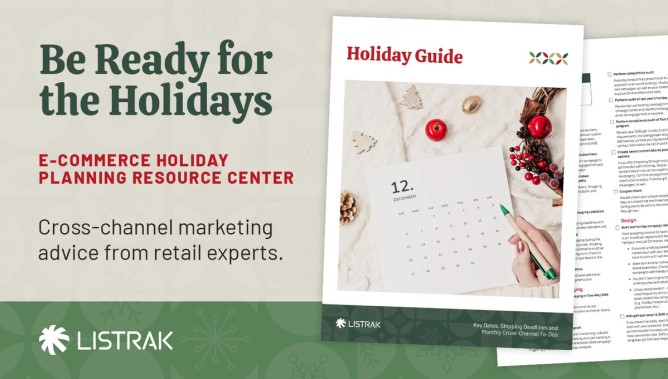
We may be knee-deep in spooky season, but EOY will be here before you know it. If your holiday revenue strategy still needs work, Listrak’s dynamic customer engagement platform has you covered.
Their e-commerce retail experts have rounded up the best holiday advice, prep tips, and must-dos that VIP retail players (think: Academy Sports, TOMS, vineyard vines) are using to make sure they’re on the ball this holiday season—and they’ve packed it all into their holiday resource center.
This resource center features bite-size videos (we’re talkin’ 5 minutes or less) and downloadable calendar guides that’ll have you set up for holiday success, including:
- making sure your emails actually land in inboxes
- keeping your SMS game on point
- mastering segmentation, personalization, loyalty, and design
- developing out-of-the-box ways to boost revenue
With these hot tips, you’ve got this holiday season in the bag.
|
|
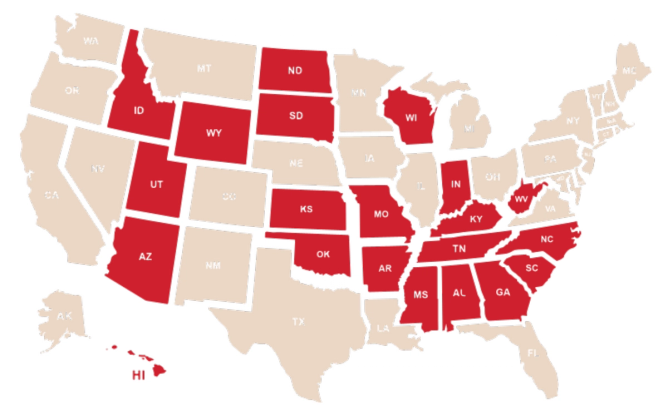
The states that are red still charge a sales a tax on period products. Tampon Tax Back Coalition
In most states, menstrual products—including tampons, pads, sponges, and menstrual cups—are not taxed, either because they’re considered basic necessities that should be tax-free or, in the case of five states, because they have no sales tax.
In recent years there has, fittingly, been a steady flow of states that abolished their tax on period products, with 22 states doing so in the last decade, according to the Alliance for Period Supplies, a nonprofit organization.
Texas was the most recent state to eliminate taxes on period products, with its law going into effect on September 1.
But 21 states are still taxing the products, and now eight woman-founded menstrual-hygiene brands have formed the Tampon Tax Coalition to advocate for abolishing the tax in those states, too.
Keep reading here.—AAN
|
|
Zohar Gilad
On Wednesdays, we wear pink spotlight Retail Brew’s readers. Want to be featured in an upcoming edition? Click here to introduce yourself.
Zohar Gilad is co-founder and CEO of Fast Simon, which helps retailers optimize their e-commerce sites from merchandising to search.
This interview has been lightly edited for length and clarity.
How would you describe your job to someone who doesn’t work in retail? Fast Simon helps online retailers make more money, grow faster, and make their customers happy. My job as CEO is to lead the company from vision (where we want to be) through to strategy (how we get there) to execution (making it happen).
One thing we can’t guess about your job from your LinkedIn profile? How much time I spend with customers to deeply understand their needs and pain points. This direct customer insight is key to product market fit. It guides our product roadmap.
What’s your favorite project you’ve worked on? That would be like asking a parent which child they love the most.
Which emerging retail trend are you most excited about this year, and why? I am excited about vector search and large language models such as ChatGPT. The shopper experience in e-commerce is quite complex: It is visual and textual, inspirational and search based, and it alternates between all of the above. Vector search technology and ChatGPT make it possible to deliver the online equivalent of the ultimate human.
Keep reading here.—EC
|
|
|
Sip more, stress less. Know what doesn’t pair well with a seasonal latte? Endless invoices and approvals that demand your attention. Fortunately, BILL can help you approve, pay, and sync bill payments; send custom invoices; and get paid faster. Take a demo before Oct. 31 and get a $50 Starbucks gift card.
|
|
Today’s top retail reads.
Sniff test: Celebrity fragrances are making a comeback, but new entries from Beyoncé and Troye Sivan are leaning deeper into luxury, a departure from the star-studded scent offerings in the early aughts. (Business of Fashion)
Big energy: Celsius CEO John Fieldly shares how the energy drink brand is attracting Gen Z consumers. (Marketing Dive)
Final stretch: Micro-plastics shed from synthetic fibers like spandex and polyester found in stretchy jeans can end up in landfills for centuries. Triarchy is working to create a biodegradable fiber to create comfortable jeans without the plastic. (Fast Company)
|
|
ADVERTISE
//
CAREERS
//
SHOP
//
FAQ
Update your email preferences or unsubscribe
here.
View our privacy policy
here.
Copyright ©
2023
Morning Brew. All rights reserved.
22 W 19th St, 4th Floor, New York, NY 10011
|
|