|
It’s Monday, and we’d like to take a moment to acknowledge that “shrinkflation,” a term we first introduced you to in 2022, and then declared as that year’s retail word of the year, has continued to grow. In fact, in his State of the Union, President Biden mentioned shrinkflation outright and urged Congress to pass the Shrinkflation Prevention Act, which US Senator Bob Casey introduced in February. Don’t those portmanteaus grow up fast?
In today’s edition:
—Alex Vuocolo, Erin Cabrey, Katishi Maake
|
|
|
STORES
|
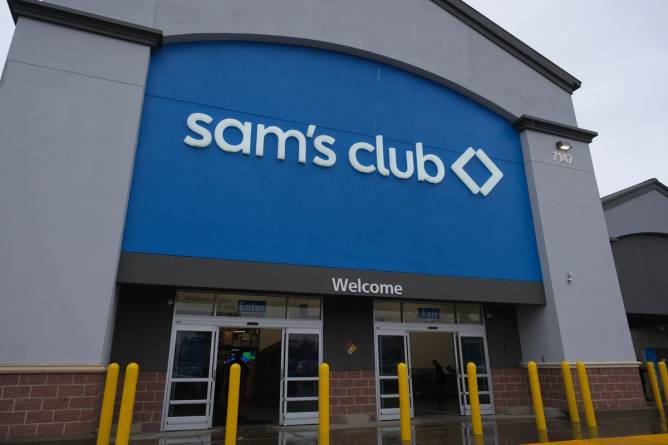
Earlier this year, Sam’s Club unveiled a new technology that uses computer vision and machine learning to allow customers to exit stores after the checkout process without an associate checking their receipt—a common practice at membership-only warehouse stores.
Now, the Walmart-owned chain is testing the technology at 10 locations, and there are plans to expand it to 600 by the end of the year.
But none of this would be possible without a key back-end technology known as “edge computing,” which gives individual stores the computing power to handle AI-powered functions such as seamless exit, Todd Garner, interim chief product officer at Sam’s Club, told Retail Brew.
Garner said the company started working on ways to make the exit process more seamless back in 2016, when it became clear that members were identifying it as their biggest pain point.
“As we looked at the data, we really tried to understand where our members still had pain, still had frustration,” he said. “What we found was that our exit process regularly emerged as one of the top areas of inconvenience for them.”
The launch of Scan & Go, which allows customers to scan and pay for items on their smartphones, was one solution designed to speed up the checkout process—though customers still had to present their receipts to an employee before exiting.
Keep reading here.—AV
|
|
|
|
|
|
FROM THE CREW
|
Morning Brew’s unique community of young, hard-to-reach readers (that’s 22m+ monthly readers who are 1.7x more likely to have a household income of $150k+, to be exact) can give your B2B offerings the valuable visibility you’re looking for.
B2B decision-makers, it’s crucial to get your business’s potential in front of the right  s. That’s why the Brew’s paid advertising opportunities connect your brand to our audience by leveraging our popular B2B-centric franchise newsletters, specialized events, and skyrocketing collection of multimedia content. s. That’s why the Brew’s paid advertising opportunities connect your brand to our audience by leveraging our popular B2B-centric franchise newsletters, specialized events, and skyrocketing collection of multimedia content.
Morning Brew is powered by the knowledge you need. From Marketing Brew’s trending insights to CFO Brew’s timely updates, we’ve got a B2B Brew for you. Choose yours to grow with.
|
|
|
|
GROCERY
|
On its fourth quarter and full-year 2023 earnings call last week, Kroger CEO Rodney McMullen provided an update on the grocer’s proposed merger with Albertsons and detailed the company’s “optimism for 2024.”
Following last week’s news that the Federal Trade Commission is suing to block the deal, calling it anticompetitive (Washington and Colorado also filed their own lawsuits pushing back on the deal last month), McMullen said Kroger is “committed to defending the merger.”
“While we were disappointed about the FTC’s recent attempt to challenge our merger, we were not surprised, given the current political environment,” he said, referencing its track record with previous mergers, which include Harris Teeter in 2014 and Roundy’s in 2015. “The character of a company is clear in its actions, regardless of what others claim. Kroger keeps its commitments. And we’re happy to share this with whomever is willing to talk with us.”
The FTC hasn’t set a hearing date yet, but Kroger expects it this summer, he said.
Kroger plans to complete 30 store openings, relocations, and expansions this year, interim CFO Todd Foley said. New stores will be an important part of the grocer’s future sales growth, McMullen noted. While the closure of the deal with Albertsons would boost its store count to more than 5,000, McMullen said Kroger will “continue to run our business just like we would run our business without the merger.”
Keep reading here.—EC
|
|
|
|
|
|
STORES
|
Welcome back, everyone. Before our next edition comes out, St. Patrick’s Day will have come and gone, so we hope everyone who celebrates has plenty of green beverages.
In new hires: Today, Outfox Hospitality, which owns Foxtrot Market, has a new CEO—Rob Twyman, who took over for Liz Williams. Williams stepped into the CEO role for El Pollo Loco, also effective today. In November, Foxtrot merged with Dom’s Kitchen & Market, and now Twyman will oversee the company’s day-to-day operations and regional growth.
- Twyman spent many years at Whole Foods, including as EVP of global operations and a regional president. He was most recently CEO of Daily Table, a nonprofit grocery company.
“Rob is a visionary in the grocery retail space having transformed the consumer food and beverage supermarket experience for over three decades,” Jay Owen, Dom’s Kitchen & Market co-founder, said in a statement.
Keep reading here.—KM
|
|
|
|
|
|
TOGETHER WITH QUAD
|
Spring-clean your marketing machine.  Marketers are only as good as their toolkits, and who wants one full of clutter? Fortunately, Quad—the integrated marketing platform that offers end-to-end solutions to 2,900+ CPG brands—knows how to streamline processes and improve CX. Help shoppers find your products faster. Marketers are only as good as their toolkits, and who wants one full of clutter? Fortunately, Quad—the integrated marketing platform that offers end-to-end solutions to 2,900+ CPG brands—knows how to streamline processes and improve CX. Help shoppers find your products faster.
|
|
|
Level up your career with these resources from our sponsors!
|
|
|
|
SWAPPING SKUS
Today’s top retail reads.
Body slam: The Body Shop filed for bankruptcy in the US and Canada. (the Guardian)
Prime target: How Target, Walmart, and other retailers are competing with Amazon Prime with their own subscription programs. (Marketplace)
Schmear bliss: Why New York-style bagel shops are booming in London. (the New York Times)
|
|
|
|
HOT TOPIC
|
At the mall, it’s where band tees are the only tees. In Retail Brew, it’s where we invite readers to weigh in on a trending retail topic.
Among the measures in a New York State Senate bill, the Retail Worker Safety Act, is a requirement for retailers with more than 50 employees to install panic buttons for employees in their stores as a safety measure.
You tell us: Do you support requiring stores with more than 50 employees to install panic buttons for workers? Cast your vote here.
Circling back: Last week, we told you about how Kellogg’s CEO Gary Pilnick said recently that one way to deal with the rising cost of groceries is for more families to eat cereal for dinner. So we asked if you though eating cereal for dinner was a viable response to inflation.
You were not bowled over by the notion, with 83.2% of you saying no, that you did not think eating cereal was a viable response to inflation, and just 16.8% of you thinking it was a good idea.
|
|
|
|
SHARE THE BREW
|
Share Retail Brew with your coworkers, acquire free Brew swag, and then make new friends as a result of your fresh Brew swag.
We’re saying we’ll give you free stuff and more friends if you share a link. One link.
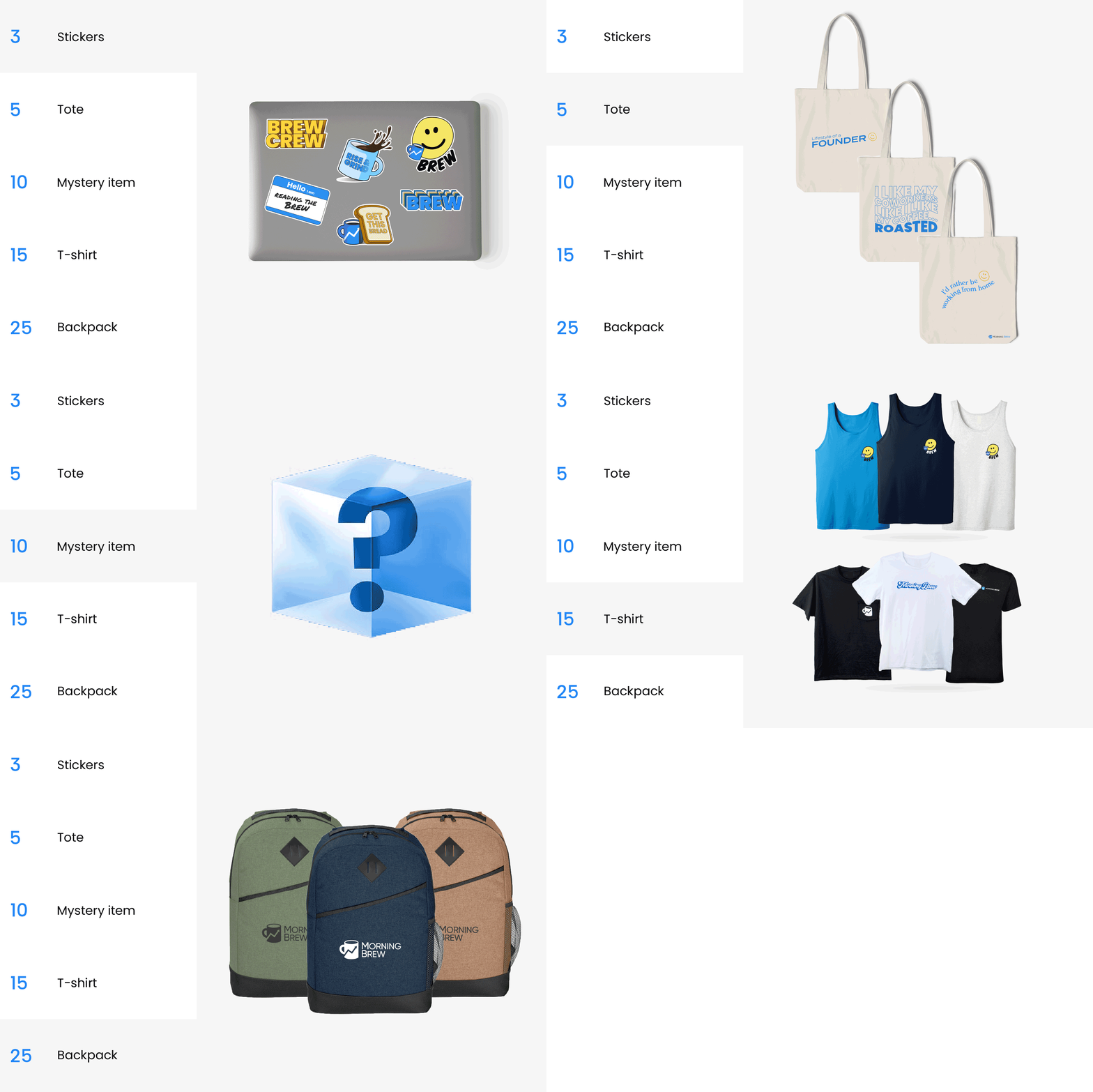
Your referral count: 2
Click to ShareOr copy & paste your referral link to others:
retailbrew.com/r/?kid=9ec4d467
|
|
|
ADVERTISE
//
CAREERS
//
SHOP
//
FAQ
Update your email preferences or unsubscribe
.
View our privacy policy
.
Copyright ©
2024
Morning Brew. All rights reserved.
22 W 19th St, 4th Floor, New York, NY 10011
|
|




 our audience