By Erin Cabrey
• 3 min read
The lab makes the brand’s sustainability claims more “tangible” for consumers, Lena Korres told us.
Korres
At the new Korres store in Manhattan, it’s not just about selling bottles of its Greek-inspired serums, creams, and cleansers, but also giving empties a second life.
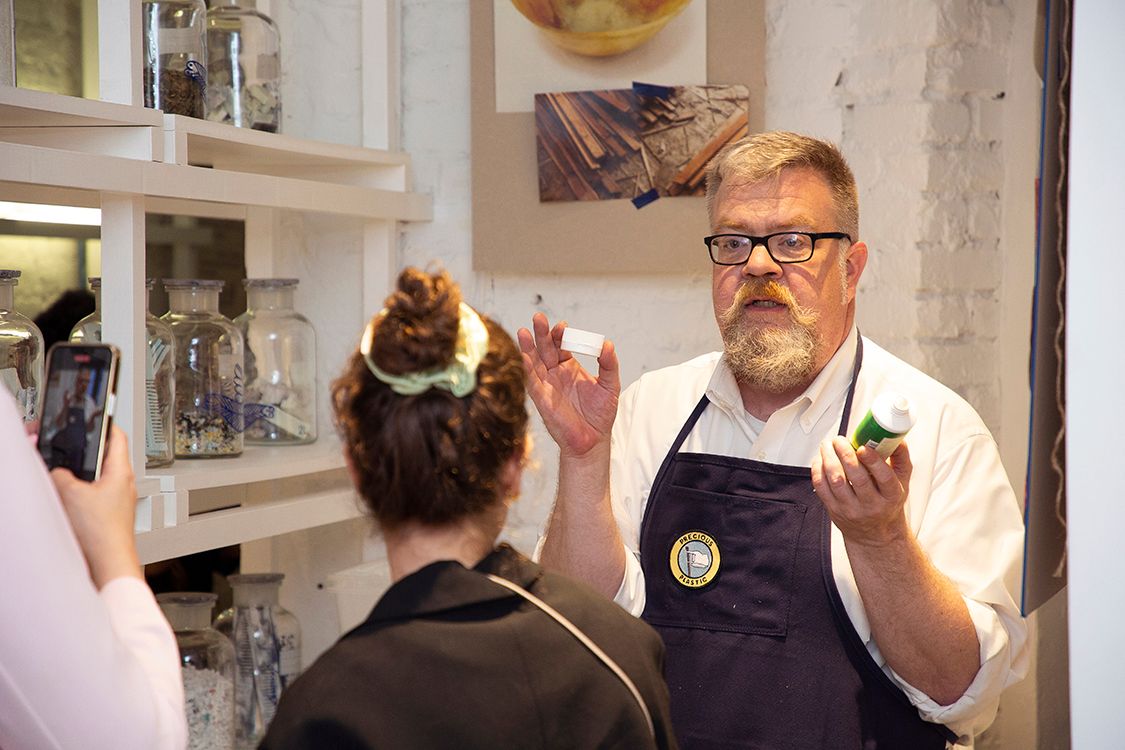
If you head past the shelves of skincare products to the back of the brand’s 750-square-foot Nolita store, which opened last month, you’ll find a recycling lab, where Korres, in partnership with the New York City chapter of recycling nonprofit Precious Plastic, converts used plastic packaging into new products.
It’s the company’s second recycling lab, a much more intimate one compared to its Athens-based facility, which opened in 2020. There, used packaging is transformed into a number of items—like combs—and the lab has recycled one ton of plastic, one ton of paper, and almost 450 pounds of glass thus far.
The machines, created by Precious Plastic, are open-sourced for anyone to replicate. “It enables us not to necessarily change as much the consumer model, it enables us to actually improve the consumer model in that [they] consume the same and waste less,” Dusek said.
The Korres in-house recycling lab is aimed at making the 26-year-old brand’s circularity claims “tangible” for consumers, co-founder and chief innovation officer Lena Philippou-Korres told Retail Brew. That participation in the process is something that consumers are “hungry for,” she noted.
Of course, putting the consumer-facing lab in the store, rather than a closed-off facility, had a “bit more complexity,” Philippou-Korres said.
Circling around: With most products available to buy online, it’s increasingly important for brands with a retail presence to find that “extra” that inspires consumers to come into their physical stores, particularly an experience that touches their consumer values, Melissa Gonzalez, founder and CEO of experiential retail firm The Lionesque Group, told us.
“Consumers want to align themselves with brands that stand for something more than just selling a product, and sustainability is a critical aspect of that,” she said. “It’s not only just about being experiential; it’s also a strong statement to say to a consumer that you stand behind something. And then also [to say], “We’re empowering you to also be part of that. “
Plus, in-store experiences keep brands top of mind for consumers, even if shoppers don’t buy a product during that visit.
“Those are the brands they’re gonna think of immediately because they gave me great experiences and that’s what I’m seeing in my head,” she said.