• 4 min read
Honey, I shrank the bunches of oats: ‘Family’ and ‘Giant’ size cereal boxes are getting smaller
Consumers may not notice shrinkflation when cereals are downsized
Morning Brew
Consumers may not notice shrinkflation when cereals are downsized
Morning Brew
Shrinkflation, or when manufacturers make their products smaller rather than raise prices, is a contender for buzziest retail portmanteau. (Hang in there, phygital!)
It is not a term of endearment. On TikTok, outraged videos feature newly downsized products that cost the same as before.
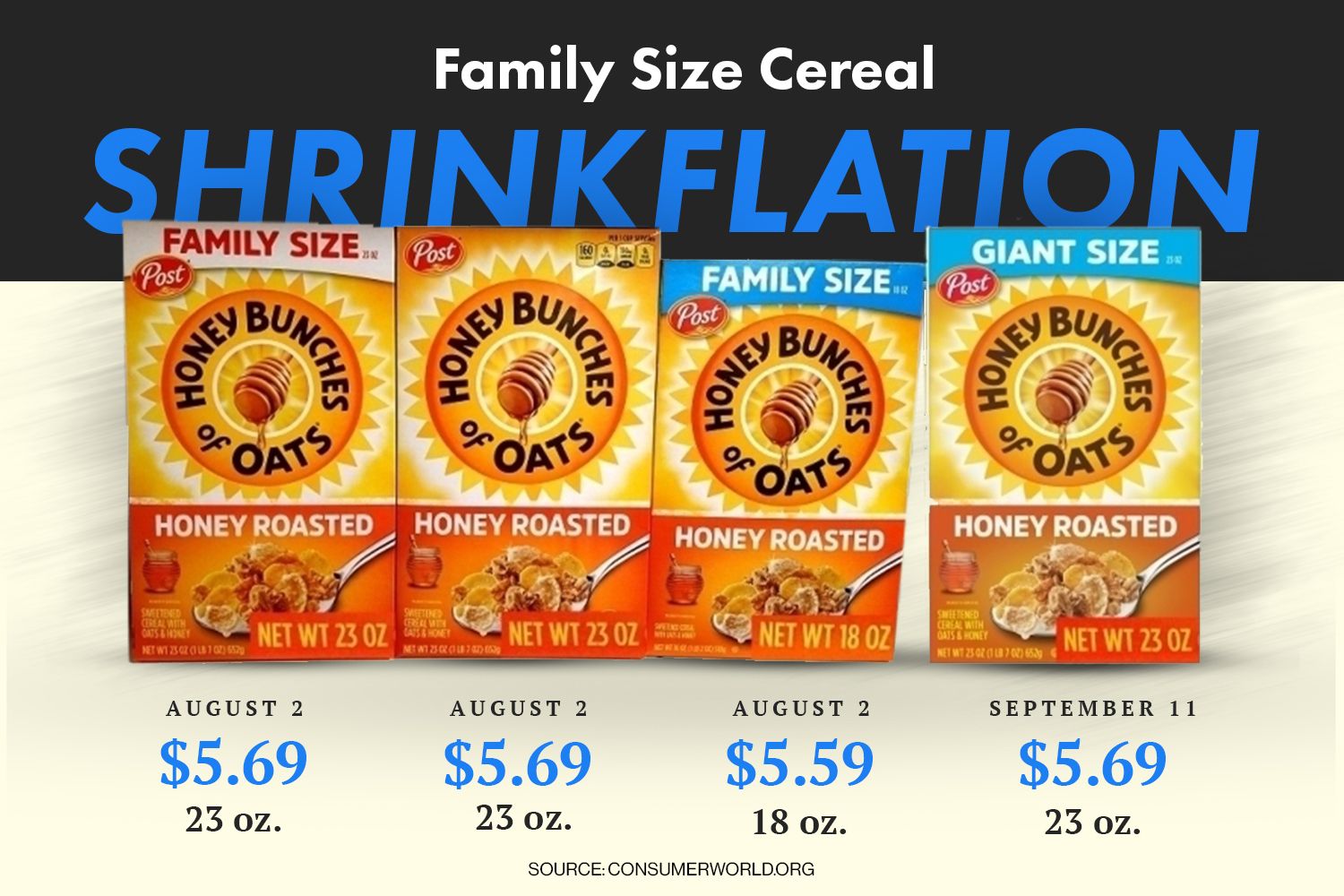
But what may make it even harder for shoppers to notice shrinkflation: the amorphous way terms like “family size” and “giant size” are emblazoned on products. Some cereal brands have recently reduced the contents of their family- and giant-sized boxes by more than 20%, and if shoppers are only looking at the size descriptors, they might miss that the actual size of the product is smaller.
They might be smaller giants. In a recent post on his website, Mouse Print, Edgar Dworsky, a consumer advocate and lawyer, compared recently redesigned boxes of Post Honey Bunches of Oats and Kellogg’s Corn Flakes.
Shrinking family size is “problematic,” Dworsky told Retail Brew. “Because if you’re habituated to buy the family size… that gives [brands] an opportunity to tinker with the net weight and possibly go undetected by many folks.”
Bowled under. We made repeated requests to both Post and Kellogg’s for comment, asking which cereal brands were downsizing family and giant sizes, and whether they were lowering the wholesale price for the smaller versions. Neither Kellogg’s nor Post responded.
But in an appearance on CNBC on August 4, Kellogg’s CEO Steve Cahillane was asked about shrinkflation, and while not quite denying the practice, distanced his company from it.
“Our objective is not to actually engage in that,” Cahillane said. “What we try and do is make our products more affordable, so if we make it smaller, we also make it cheaper.”
But that’s “PR doublespeak,” Dworsky said. Cahillane’s “telling, in essence, part of the truth—it may be true that they’re dropping the price when they’re dropping the size. He’s making people infer from that that they’ve dropped [the price] the equivalent amount, when they probably haven’t.”
Shrinkflinition: Merriam-Webster’s newly minted definition of shrinkflation reflects how it’s generally been characterized in news reports, as “the practice of reducing a product’s amount or volume per unit while continuing to offer it at the same price.”
But Dworsky defines it more expansively, as the product shrinking and “you’re paying more per ounce.”
However you define it, manufacturers facing higher costs are between a family-sized rock and a giant-sized hard place.
“They’re walking that fine line of either taking a price increase or keeping the price the same but giving people less product,” Emily Moquin, a food and beverage analyst at Morning Consult who authored its recent report on consumer attitude toward shrinkflation, told us. “And so oftentimes, the idea of giving less product but you can keep that overall price the same is…the best of two not-great options for manufacturers.”
+1: In a post on his website on September 26, Dworsky highlights shrinkflation’s cousin, skimpflation, where reformulated products are the same weight and price, but with cheaper ingredients. Smart Balance buttery spread, he notes, recently watered down its recipe, in the literal sense. Water used to be the second ingredient but is now the first, and the product, which once contained 64% vegetable oils, now has 39%. Responding to hundreds of furious one-star reviews of the reformulated product on the Smart Balance website, parent company Conagra informed customers that the old formula would return to shelves later in the fall or winter.