In the Gen Z trend cycle, hair-care brands work to balance virality and longevity
“When we’re making a product, we’re trying to think more of the less extreme version and the slightly more everyday version,” Insert Name Here co-founder Jordynn Wynn noted.
Hally Hair
Retail news that keeps industry pros in the know
Retail Brew delivers the latest retail industry news and insights surrounding marketing, DTC, and e-commerce to keep leaders and decision-makers up to date.
RB
Gen Z has been the driving force behind a lot of hair trends recently—some good (middle parts) and some bad (zigzag parts). But trends move faster than break-up bangs grow. E-girl highlights are so yesterday, it’s all about baby braids now.
Despite all the #hairstyle content (which has 55.6 billion views on TikTok), less than half (44%) of Gen Z say they purchase hairstyling products, according to YPulse, a youth research firm. It shows there’s “definitely a gap there and potentially an opportunity to grow the Gen Z market,” YPulse Chief Content Officer MaryLeigh Bliss told Retail Brew. (Though it could, of course, be a “red flag” for new entrants.)
New hair-care brands are using that open space to innovate—capitalizing on what’s going viral on TikTok and aligning their products with the needs, values, and budgets of Gen Z shoppers to (hopefully) outlast the frenzied trend cycle.
Hair and now
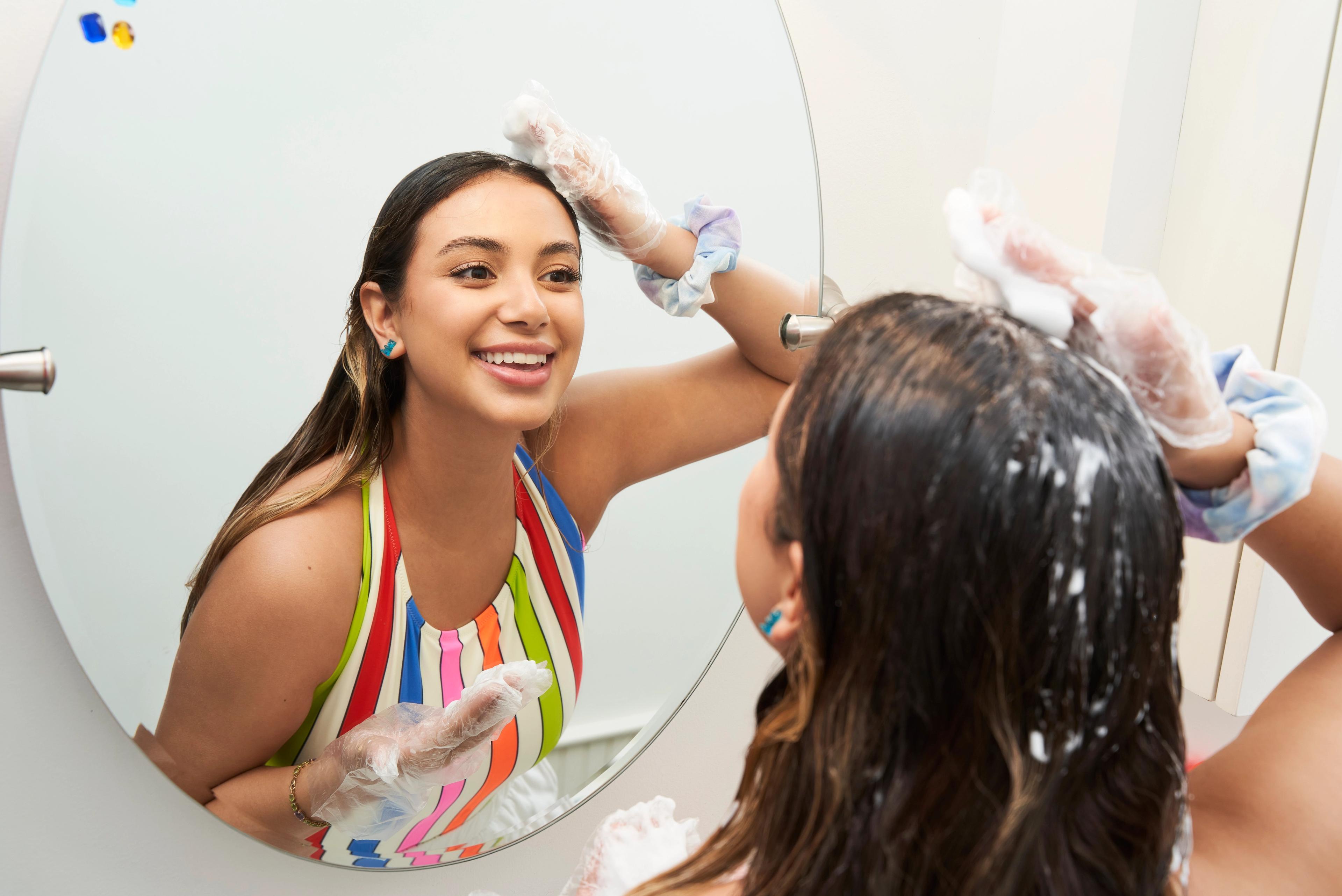
Hally Hair’s foam hair dye is reaching Gen Z by taking inspiration from the experiences of an actual Zoomer—and K-pop. Founder and CEO Kathryn Winokur told us she was leading marketing at Walmart’s Jetblack in 2019 when her intern had an at-home dye job go awry.
“I just couldn’t believe that this was still happening,” Winokur said. “I had a bad run-in with Sun In when I was in eighth grade, and my hair turned orange, and I’m 35. I can’t believe this is still happening 20 years later.”
She realized that the few CPG players controlled the bulk of the hair-color market with “little to zero innovation” to make at-home dying accessible to young people.
Clean beauty and personal care is the top beauty trend Zoomer women want to try, per YPulse.
Hally’s sales reached seven figures within its first year, according to the company, ~40% of which came from social media.
Second wave: Sharon Pak and Jordynn Wynn, former marketing employees for cosmetics brand ColourPop, also saw an “open spot in the hair market” when they started hair-extension brand Insert Name Here in 2018. The brand helps consumers achieve the Ariana Grande ponytail—or just a confidence boost—while catering to Gen Z’s lower spending threshold.
Its ponytail extensions, for example, start at $49.
Working at ColourPop “was helpful for us in really identifying the product and how to approach and talk about the cosmetic space because we were the consumers, the people that were actually wearing the $5 eyeshadows and these red lipsticks and matte lips,” Pak told us.
TikTok (of course) is one of their “big inspiration hubs,” Pak said, especially as it’s grown its offerings. The brand currently has 213K followers on the platform, with 3.5 million likes. But as Gen Z is “constantly changing their interests and styles,” products are also made to be versatile.
Its Hi-Lites clip-ins ($18) fit into many highlight trends, from the streaky, Christina Aguilera-esque look that was (back) in last year, to the rise of “money highlights” (face-framing pieces), she noted.
Its top-selling SKU, however, is a more “everyday” look—Wynn’s namesake pony, a mid-length product with layered curls.
“When we’re making a product, we’re trying to think more of the less extreme version and the slightly more everyday version,” Wynn said. “We haven’t really seen too much drop-off too quickly with categories because there’s always another way to use it.”
Split ends: Still, trends and TikTok’s For You page don’t always tell the “full story,” Hally’s Winokur noted. Based on feedback from 2,000 college students and even retail buyers, she found there’s a strong market for more natural looks (plus some fun ones) for its core customer base of 18- to 25-year-old women, 70% of whom are already coloring their hair.
Atomic Blonde is its best seller, followed by Purple Avalanche (a collab with influencer Ava Phillippe) and milky-brown Cola Coaster.
“You have to build a business with a core and then also a trend. For us, we look at trends as a way that we can participate in the conversation,” Winokur said. “You also have to focus on your core SKUs and your core business, which no matter what comes and goes on TikTok, will remain true.”
Because it’s not all about what’s going viral. Gen Z values—whether it be diversity and inclusion, mental health, or clean ingredients—also have a lot of sway on what they buy. For example, 76% of Gen Z want beauty ads to include more representation of different skin tones, per YPulse.
Insert Name Here works to match all different hair textures and curl patterns, while Winokur ensured Hally didn’t disrupt them. Hally also donates 1% of profits to nonprofits like Sad Girls Club, Active Minds, and Trans Lifeline.
“Gen Z, they have a million and one options,” Winokur said. “It goes into their decision-making set. ‘Is this product good for me? What are their stances on the environment? What are their opinions on mental health?’ All that is very much core to their consideration set.”