• 4 min read
How a consumer advocate caught Walgreens overcharging for cookies in Massachusetts
The chain maintains that charging tax on food items that shouldn’t be taxed was a mistake.
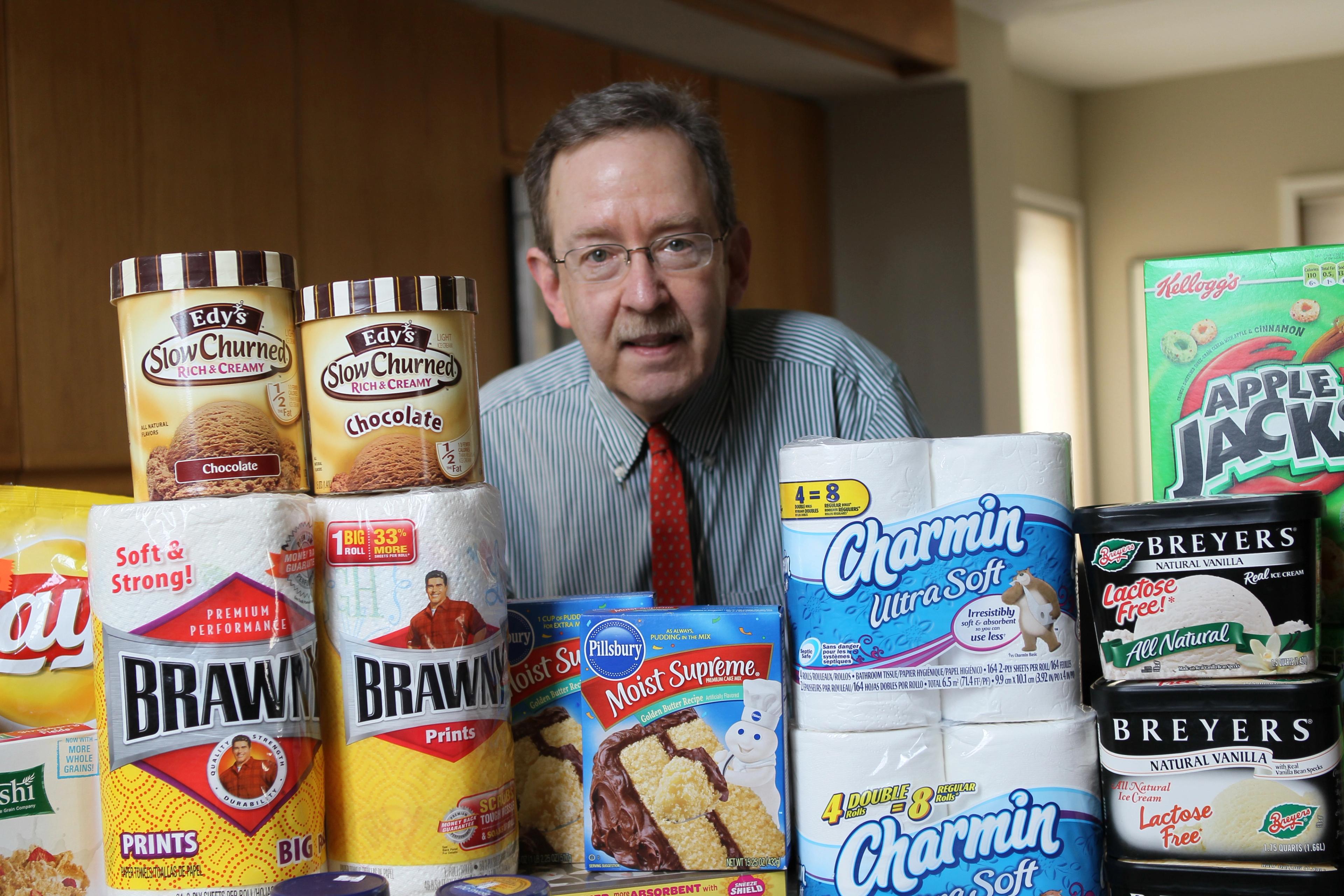
Consumer advocate Edgar Dworsky. Boston Globe/Getty Images
The chain maintains that charging tax on food items that shouldn’t be taxed was a mistake.
Consumer advocate Edgar Dworsky. Boston Globe/Getty Images
Walgreens got an object lesson on how the cookie crumbles recently, when a consumer advocate in Massachusetts discovered the company had been charging online shoppers sales tax on cookies, even though they aren’t subject to tax in the state.
Edgar Dworsky, long-time watchdog and shrinkflation avenger, revealed on his website, Consumer World, that when he saw Royal Dansk Danish Butter Cookies were on sale for $2.55, he ordered 10 tins online to pick up in the store. But while the total should have been a decimal-point move of $25.50, he noticed Walgreens also charged a 7% tax of $1.79.
But tax law in the Bay State, as a smart cookie like Dworsky well knew, exempts food, except for meals sold by restaurants. And thus began Dworsky’s quest not just to recover his own $1.79, but to get Walgreens to reimburse other consumers it had overcharged for food items, too.
Tax the Ritz: When Dworsky called customer service before he even checked out online, he was told to pay the tax, and then call back after the purchase to have the amount credited. But when he did so, customer service told him that they couldn’t credit sales tax.
After several more calls with customer service, Dworsky was issued a credit for the $1.79 and, for his trouble, a $50 gift certificate.
Dworsky then took the issue to Walgreens' PR department, which confirmed they’d been charging tax to food items online in error, with Walgreens discovering all cookies and crackers had been taxed, as well as—yes, they are technically food—Twinkies.
Walgreens “should go through all their records and automatically give back consumers the tax that they were wrongfully charged,” Dworsky told Retail Brew.
But what Walgreens is actually doing falls short of that.
Chewing it over: “If customers believe they have been impacted and now owed a sales tax refund, please contact 877-250-5823 for assistance,” Samantha Stansberry, a Walgreens spokesperson, said in a statement emailed to Retail Brew. “To help offset future instances like this, our team is working on a communication to be sent to all store leadership.”
Retail Brew asked Walgreens how many customers paid tax that they shouldn’t have been charged, and the total dollar amount that the chain overcharged Massachusetts customers, but the company declined to reveal either in its statement.
The statement did stress, however, that the chain itself did not benefit from overcharging.
“Walgreens does not profit off sales tax errors of this kind, as all tax collected is turned over to the state and local taxing authorities,” the company stated.
“Consumer World is pleased to see that Walgreens at least fessed up to the problem and corrected it relatively quickly after our contact,” Dworsky wrote on his website. “We’re disappointed they can’t make automatic refunds.”
Tax and mend: Walgreens, to use one of journalism’s hackiest transitions, is not alone when it comes to overcharging tax.
But Walgreens may take the cake when it comes to tax gaffes. As Dworsky noted on his website, Walgreens charged sales tax on toilet paper that’s not supposed to be taxed in Pennsylvania last year. Ditto for Covid tests in New York in 2022, and sparkling water and seltzer in Illinois in 2015 and 2017.